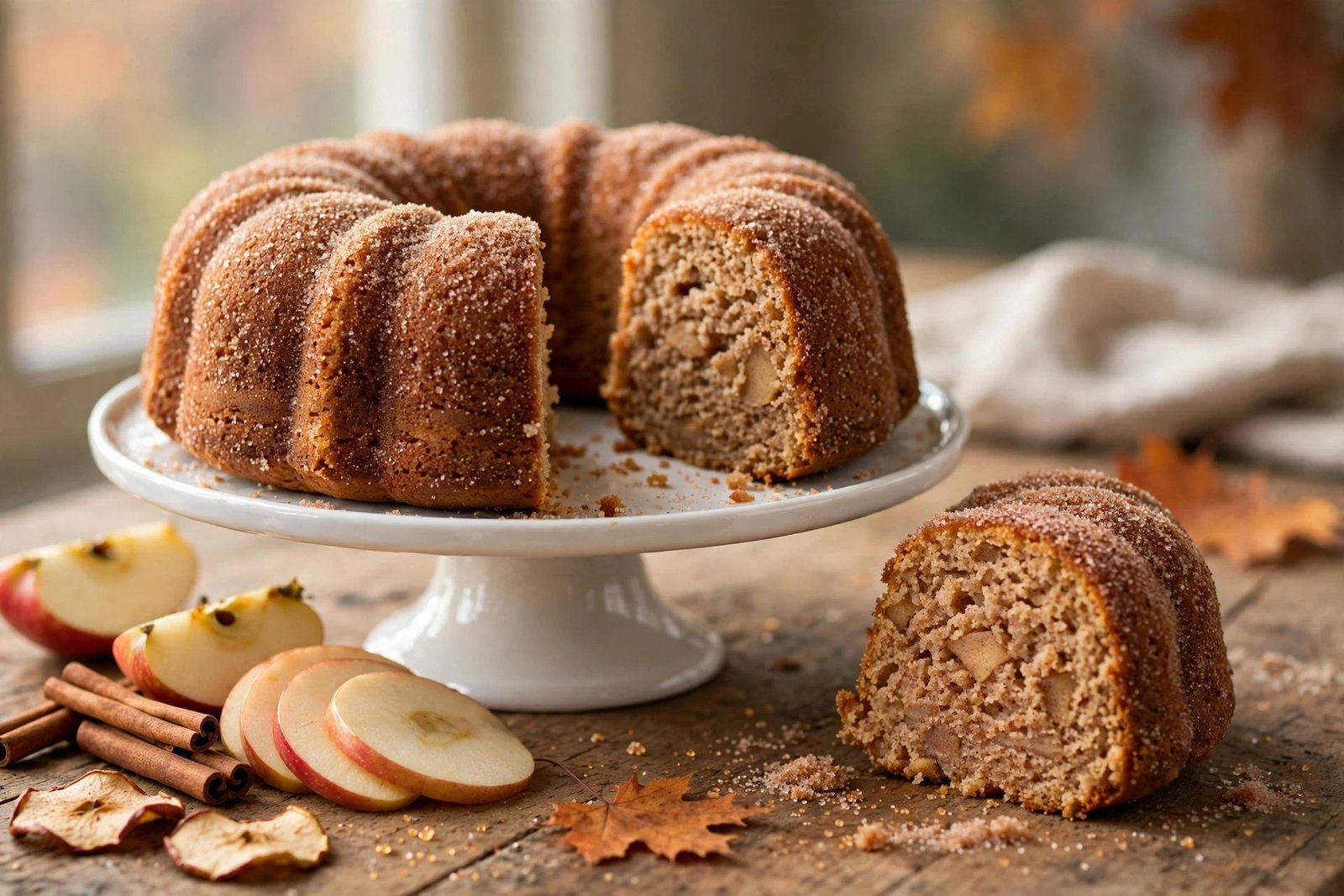
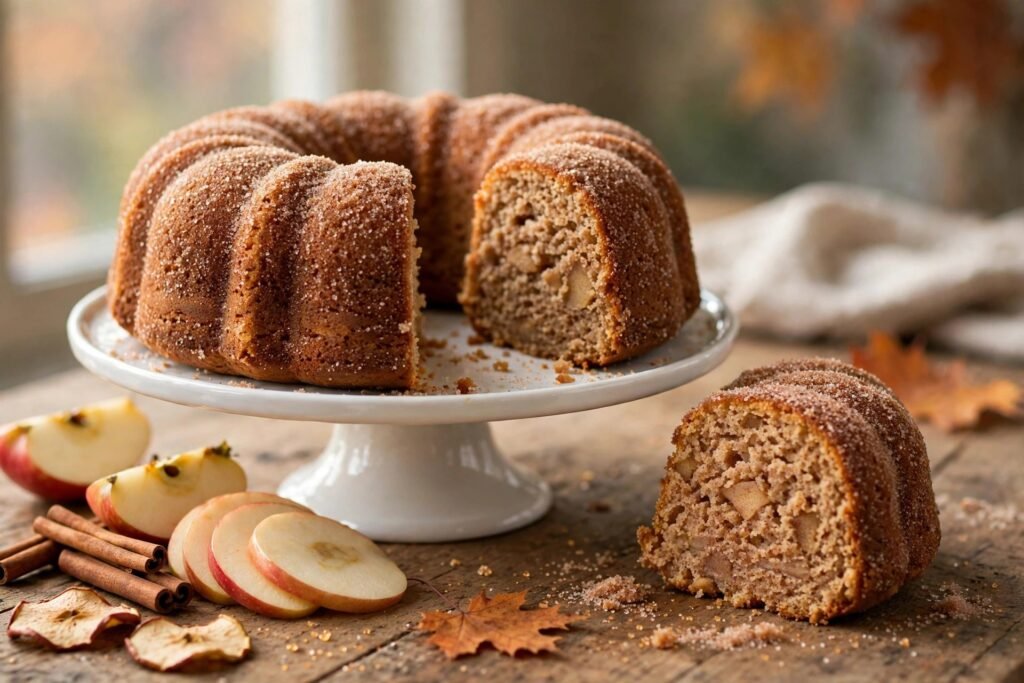
Every October, the same thing happens at my house. Somebody comes home from an orchard with a gallon of apple cider that nobody asked for, and it sits in the fridge door getting pushed aside until one of us finally does something with it. Last year it was me, on a rainy Sunday, staring at a half-gallon going flat and a bag of apples that were two days past their best. I’d already made applesauce twice that month. Nobody wanted a third batch. So I tried something I’d been thinking about for a while — an Apple Cider Donut Cake that tastes like the cider donuts from the orchard stand, except baked in a bundt pan instead of fried in a pot of oil, with the same cinnamon-sugar crust on the outside and the same soft, spiced crumb on the inside.
Here’s what surprised me. It worked on the first try. Not “worked, but needs fixing” — actually worked, the kind of cake where you cut a slice, take a bite standing at the counter, and then cut a second slice before you’ve finished the first. The outside has that slightly crunchy, sugary coating that sticks to your fingers. The inside is dense in a good way, like a donut, not fluffy like a birthday cake. And the apple flavor is real, not the vague “apple-ish” taste you get from a cake mix with a little extract thrown in. The trick is boiling the cider down first, which sounds fussy and takes about ten minutes. Everything after that is a normal cake.
I’ve made it eight or nine times since that first rainy Sunday, and it’s become the cake I bring when I need something that looks impressive and tastes like fall but doesn’t eat up my whole afternoon. It takes about twenty minutes of actual work. The oven does the rest. The hardest part is waiting for it to cool enough to get it out of the pan without it falling apart, and even that only takes ten minutes. If you’ve ever stood in line at an orchard for a warm cider donut, this is that flavor, in a cake you can slice and serve to twelve people at once.
This is also one of those recipes where the ingredient list looks longer than it is. Half of it is spices you already have. The other half is butter, sugar, eggs, and flour — the same things in almost every cake you’ve ever made. The only thing you might need to buy is a gallon of cider, and if you live anywhere near an orchard in the fall, that’s the easiest ingredient on the list. Even the grocery store kind works. Just don’t use the sparkling kind, and don’t use apple juice. I’ll explain why that matters in a minute, because it matters more than anything else in this recipe.
⚡ Quick Answer: Reduce 2 cups of apple cider down to ¾ cup (about 10–12 minutes of simmering), and let it cool. Whisk 2¾ cups flour with 2 teaspoons baking powder, ½ teaspoon baking soda, 1½ teaspoons cinnamon, ½ teaspoon nutmeg, ¼ teaspoon cloves, and 1 teaspoon salt. Beat ¾ cup softened butter with 1 cup granulated sugar and ¾ cup brown sugar until fluffy, then beat in 3 eggs, ⅓ cup vegetable oil, 1 tablespoon vanilla, and the cooled cider reduction. Mix in the dry ingredients and 1 cup of finely diced apples, alternating with ½ cup buttermilk. Bake in a greased and floured 10- or 12-cup bundt pan at 350°F for 45–55 minutes, until a skewer comes out clean. Cool 10 minutes, turn out, brush with 4 tablespoons melted butter, and roll in ¾ cup sugar mixed with 1½ teaspoons cinnamon.
TL;DR – Recipe at a Glance
- Prep time: 20 minutes, plus 10 minutes to reduce the cider
- Cook time: 45–55 minutes in the oven
- Total time: About 1 hour 30 minutes, including cooling
- Yield: 12 generous slices (one 10- or 12-cup bundt cake)
- Calories: About 380 per slice
- Difficulty: Easy — if you’ve made a box cake, you can make this
- Best for: Fall weekends, Thanksgiving dessert tables, orchard trips, bake sales, and Tuesday nights when you want the house to smell like October
- Equipment: 10- or 12-cup bundt pan, small saucepan, stand mixer or hand mixer, whisk, rubber spatula, wire rack, pastry brush
Why You’ll Love This Apple Cider Donut Cake
- It tastes like the orchard stand, without the fryer. That warm, spiced, cinnamon-sugar flavor is all here. No hot oil, no splattering, no standing over a pot dropping dough in batches.
- The cider reduction is the whole secret. Boiling the cider down concentrates the apple flavor so the cake actually tastes like apples instead of just smelling like them.
- It looks like you tried much harder than you did. A bundt cake with a sugary crust looks like a bakery cake. The pan does the decorating for you.
- One bowl of batter, one pan, done. No layers, no frosting, no piping bags. You mix, you pour, you bake, you roll it in sugar.
- It feeds a crowd. Twelve slices from one pan, and it slices cleanly, so it works for potlucks and holiday tables without any extra effort.
- It gets better overnight. The crumb stays moist for days, and the flavors settle and deepen. Make it the day before a party and it’s actually better than fresh.
- Freezes beautifully. Wrap a whole cake or individual slices and it keeps for three months, so you can bake in October and eat it in January.
The Recipe Card
| Prep Time | 20 minutes (+ 10 min cider reduction) |
| Cook Time | 45–55 minutes |
| Total Time | About 1 hour 30 minutes |
| Servings | 12 slices |
| Calories | ~380 per slice |
| Course | Dessert |
| Cuisine | American |
| Method | Baking (bundt pan) |
| Keyword | apple cider donut cake |
Overview
| Cider | 2 cups reduced to ¾ cup (the flavor base) |
| Flour | 2¾ cups all-purpose |
| Fat | ¾ cup butter + ⅓ cup vegetable oil |
| Sugar | 1 cup granulated + ¾ cup brown sugar |
| Eggs | 3 large, room temperature |
| Apples | 1 cup finely diced (about 1 medium apple) |
| Spices | Cinnamon, nutmeg, cloves |
| Coating | 4 tbsp melted butter + ¾ cup sugar + 1½ tsp cinnamon |
| Pan | 10- or 12-cup bundt, greased and floured |
Ingredients
- 2 cups apple cider — the real, cloudy, unfiltered kind from the produce section or an orchard; it reduces to ¾ cup
- 2¾ cups all-purpose flour — spooned into the cup and leveled, not scooped from the bag
- 2 teaspoons baking powder — check the date; old baking powder is the quiet reason cakes don’t rise
- ½ teaspoon baking soda — this reacts with the cider’s acidity, so don’t skip it
- 1½ teaspoons ground cinnamon — for the batter; the coating has its own cinnamon
- ½ teaspoon ground nutmeg — freshly grated if you have it; the pre-ground kind works too
- ¼ teaspoon ground cloves — a little goes a long way; more than this and it starts tasting like a spice candle
- 1 teaspoon fine sea salt — it sharpens the apple flavor instead of making the cake taste salty
- ¾ cup unsalted butter, softened — leave it on the counter for an hour; it should give when you press it but not be greasy
- 1 cup granulated sugar — for the batter’s structure and sweetness
- ¾ cup light brown sugar, packed — brings a little molasses warmth and keeps the crumb moist
- 3 large eggs, room temperature — cold eggs don’t blend into butter properly; set them in warm water for 5 minutes if you forgot
- ⅓ cup vegetable oil — the reason this cake stays soft for days; butter alone dries out faster
- 1 tablespoon vanilla extract — the real kind, not imitation; it rounds out the spices
- 1 cup finely diced apples — about 1 medium apple, peeled, cut into pieces no bigger than a pea
- ½ cup buttermilk — full-fat if you can find it; it adds tenderness and a little tang
- 4 tablespoons unsalted butter, melted — for brushing the outside before the sugar coating
- ¾ cup granulated sugar — for the cinnamon-sugar coating
- 1½ teaspoons ground cinnamon — for the coating; mixed with the sugar above
Equipment
- 10- or 12-cup bundt pan — the classic fluted kind; a tube pan works too
- Small saucepan — for reducing the cider
- Stand mixer or hand mixer — a wooden spoon and some patience also work
- Whisk — for the dry ingredients
- Rubber spatula — for scraping the bowl and folding in the apples
- Wire cooling rack — the cake needs air underneath while it cools
- Pastry brush — for the melted butter on the finished cake
- Long skewer or thin knife — for testing whether the middle is done
Quick Instructions
- Pour 2 cups cider into a small saucepan. Simmer over medium heat for 10–12 minutes, until it measures ¾ cup. Set aside to cool.
- Heat the oven to 350°F. Grease every ridge of the bundt pan with soft butter or baking spray, then dust with flour and tap out the extra.
- Whisk the flour, baking powder, baking soda, cinnamon, nutmeg, cloves, and salt together in a bowl.
- Beat the softened butter with both sugars until pale and fluffy, about 3 minutes. Beat in the eggs one at a time, then the oil, vanilla, and cooled cider reduction.
- Add the dry ingredients in three parts, alternating with the buttermilk in two parts. Stir just until the flour disappears.
- Fold in the diced apples with a spatula. Scrape the batter into the pan and smooth the top.
- Bake 45–55 minutes, until a skewer poked into the center comes out clean or with a few moist crumbs.
- Cool in the pan on a wire rack for exactly 10 minutes, then turn the cake out onto the rack.
- Brush the warm cake all over with melted butter, then sprinkle and press the cinnamon sugar over every surface. Slice and serve.
The Cider Reduction: The One Step That Makes or Breaks It
If you skip everything else in this article and remember one thing, make it this: reduce the cider. It’s the difference between a cake that tastes like apples and a cake that tastes like cinnamon with a rumor of apple somewhere in the background.
Here’s why. A cup of apple cider is about 88 percent water. Pour it straight into cake batter and most of it just steams off in the oven, leaving behind a little sugar and a little flavor. Boil two cups down to three-quarters of a cup and you’ve done the opposite — you’ve driven off the water and kept everything that tastes like apple. The sugars concentrate. The acids concentrate. That sharp, tangy, almost wine-like note in good cider gets stronger. What goes into the batter is basically apple essence, and you can taste it in every bite.
It takes ten to twelve minutes. Pour the cider into a small saucepan — not a wide skillet, because you want it to simmer, not evaporate in two minutes and scorch — and bring it to a steady simmer over medium heat. Not a rolling boil. A rolling boil throws cider all over your stove and can turn bitter at the edges. A simmer, with small bubbles breaking the surface, is right. You’ll see the level drop. When you think it’s close, pour it into a measuring cup to check. You want ¾ cup. If you overshoot and end up with ½ cup, that’s fine — the flavor is even stronger, just add ¼ cup of water or a little extra buttermilk to keep the batter’s liquid in balance. If you undershoot and it’s still over a cup, put it back on the heat for a few more minutes.
Then let it cool. This matters more than it sounds. Hot cider poured into creamed butter melts the butter, and melted butter doesn’t hold air the way creamed butter does. The cake still bakes, but it comes out denser and a little greasy. Warm is fine. Room temperature is best. I usually reduce the cider first, before I even turn the oven on, and by the time I’ve measured everything else, it’s cooled enough to use.
One question I get a lot: can I use apple juice instead? You can, but the cake won’t taste the same. Apple juice is filtered and pasteurized until it’s sweet and one-dimensional — pleasant, but flat. Real cider is cloudy, a little tart, a little wild. It has tannins from the apple skins and a sharpness that survives baking. If apple juice is all you have, reduce it the same way, and add a tablespoon of lemon juice to the reduction to put some of that sharpness back. It won’t be identical, but it’ll be close enough that nobody at the table will complain.
What about hard cider? Skip it. The alcohol mostly bakes off, but hard cider is usually drier and less sweet than sweet cider, and some of the flavored ones have things in them you don’t want in a cake. Save it for drinking with the cake instead.
And don’t buy the sparkling cider in the wine aisle, either. The carbonation does nothing in the batter, and the flavoring is usually artificial. You want the jug from the produce section — the one that goes cloudy at the bottom and says “unfiltered” on the label. In October and November, most grocery stores carry it. The rest of the year, the shelf-stable kind in the juice aisle works too.
Which Apples Actually Belong in This Cake
The recipe calls for one cup of finely diced apples folded into the batter, and the variety you pick changes the cake more than you’d think. This isn’t a garnish. The apples bake into the crumb, and the wrong one turns to mush or stays crunchy in a bad way.
Honeycrisp is my first choice. It holds its shape in the oven, so you get little pockets of apple in every slice instead of applesauce streaks. It’s sweet with a little tartness, which is exactly what this cake wants. Gala is a close second — softer than Honeycrisp, but it still holds up, and it’s sweet enough that you don’t need to adjust the sugar. Granny Smith works if you like things on the tart side; the cake’s sugar balances it out, and the tartness makes the cider flavor pop a little more. Braeburn and Fuji are fine too.
The one to avoid is Red Delicious. It’s the apple most people have in the fridge, and it’s the worst choice for baking. The flesh goes mealy and soft, and the flavor is so mild it disappears entirely. You end up with a cake that has the texture of wet bread in spots and no apple flavor to show for it. McIntosh is almost as bad — it collapses completely. Save both of them for eating out of hand.
Peel the apple. I know, some recipes say the peel adds flavor and fiber, and that’s true for a pie where the slices are big. Here the pieces are tiny, and the peel turns tough and papery in the batter — little dark curls that taste like nothing and feel like something went wrong. Peel it, core it, and dice it small. Pea-sized is the goal. Bigger chunks sink to the bottom of the pan and create wet pockets. Smaller pieces distribute through the crumb and melt into the cake, so every bite has apple in it without any single bite being all apple.
Toss the diced apple with a spoonful of the flour mixture before folding it in. This is an old baker’s trick and it works: the flour coats each piece and keeps it suspended in the batter instead of sinking. It takes ten seconds and it saves the bottom of the cake from turning into an apple layer. If you forget, the cake is still fine — just a little apple-heavy at the bottom. Nobody’s going to send it back.
Step-by-Step: Making Apple Cider Donut Cake
Step 1: Reduce the cider first, before anything else
Pour 2 cups of cider into a small saucepan and set it over medium heat. Let it come to a simmer — small bubbles, steady steam — and leave it alone for 10 to 12 minutes. Check it at 10 minutes by pouring it into a heatproof measuring cup. You want ¾ cup. If it’s still over that, back on the heat for two or three more minutes. Set the reduction aside to cool while you do everything else. This is the step people skip when they’re in a hurry, and it’s the step that makes the whole cake taste like apples. Don’t skip it.
Step 2: Prep the pan like your cake depends on it — because it does
A bundt pan has about fifty little ridges and curves, and the cake will stick to every single one of them if you give it the chance. Take a tablespoon of soft butter and a pastry brush, or a paper towel, and get butter into every groove. Then dust the whole inside with flour, tilt the pan around until every surface is coated, and tap the extra out over the sink. Baking spray with flour in it works too, and it’s faster — just make sure you spray every ridge, not just the top. I’ve lost exactly one cake to a pan I thought was greased well enough, and that was enough. Ten minutes after it comes out of the oven is the moment of truth, and a badly greased pan is how you end up with half a cake still stuck to the metal.
Step 3: Whisk the dry ingredients together
Flour, baking powder, baking soda, cinnamon, nutmeg, cloves, salt — all in one bowl, whisked for about thirty seconds until you can’t see any streaks of spice. This does two things. It spreads the leavening evenly through the flour, so the cake rises evenly instead of in lopsided bumps. And it breaks up any little clumps of baking soda, which taste awful if they survive into the finished cake — bitter, soapy spots that ruin a whole slice. If your flour has been sitting in a humid kitchen, sift it first. Clumpy flour makes clumpy cake.
Step 4: Cream the butter and sugars until it actually changes color
Beat the softened butter with the granulated sugar and brown sugar on medium speed for a full three minutes. Not one minute. Three. You’re looking for the mixture to turn pale, almost white, and fluffy — noticeably lighter than when you started. This is where the cake gets its lift. The sugar crystals cut tiny air pockets into the butter, and those pockets expand in the oven. Short-change this step and the cake comes out dense. Overdo it — five minutes or more — and the butter gets too warm and the air pockets collapse. Three minutes is the sweet spot. Scrape the bowl down once halfway through so no cold butter hides at the bottom.
Step 5: Add the eggs, oil, vanilla, and cider
Beat in the eggs one at a time, letting each one disappear before the next goes in. Then the oil, the vanilla, and the cooled cider reduction. The batter might look a little curdled at this point — that’s the cider’s acid meeting the butter, and it’s normal. Don’t panic and don’t keep beating it hoping it’ll smooth out. It won’t, and over-beating at this stage toughens the cake. It’ll come together once the flour goes in.
Step 6: Alternate the flour and buttermilk
Add the dry ingredients in three parts, alternating with the buttermilk in two parts: flour, buttermilk, flour, buttermilk, flour. Mix on low speed, or by hand with a spatula, just until the flour disappears after each addition. The moment you can’t see dry flour anymore, stop. Every extra stir develops gluten, and gluten is what makes a cake tough instead of tender. This is the step where most home bakers go wrong, because it feels like the batter should be smoother than it is. A few small lumps are fine. They bake out. Toughness doesn’t.
Step 7: Fold in the apples and get it in the pan
Toss the diced apples with a spoonful of the flour mixture first, then fold them in with a rubber spatula — a few gentle turns, just enough to distribute them. Scrape the batter into the prepared bundt pan and smooth the top with the spatula. Give the pan one firm tap on the counter to settle the batter into the ridges and knock out any big air bubbles. Don’t tap it five times. Once is enough.
Step 8: Bake, and test the middle, not the edges
Forty-five to fifty-five minutes at 350°F. The edges will look done before the middle is — that’s how bundt pans work, because the center is the thickest part. Start checking at 45 minutes. Push a long skewer or a thin knife straight down into the center of the cake, all the way to the bottom. It should come out clean, or with a few moist crumbs stuck to it. Wet batter means another five minutes. The top should spring back when you press it gently, and the cake should be pulling away from the sides of the pan just slightly. If the top is browning too fast before the middle is done, lay a sheet of foil loosely over the top for the last ten minutes.
Step 9: The ten-minute wait, then the sugar coat
Leave the cake in the pan on a wire rack for exactly ten minutes. Less than that and it’s too soft to hold its shape when you flip it — it can crack or split. More than that and the sugar in the batter starts to bond with the pan, and you’ll be prying it out in pieces. Ten minutes is the window. Flip it onto the rack, lift the pan off slowly, and if it resists, give the pan a gentle shake — don’t yank. While the cake is still warm, brush it all over with melted butter, top and sides, then shower the cinnamon sugar over it, pressing gently with your hands so it sticks. The warmth of the cake melts the butter slightly and the sugar grabs on. Let it cool for at least thirty minutes before slicing, or the crumb will be too soft and the slices will tear.
Bundt Pan vs. Tube Pan vs. Loaf Pan: What Changes
Not everyone owns a bundt pan, and that’s fine — this batter is forgiving about the pan. But the pan changes the bake, so here’s what to expect.
| Pan | Bake time | What changes |
|---|---|---|
| 10- or 12-cup bundt pan | 45–55 minutes | The classic. The hole in the middle means heat reaches the center, so it bakes evenly and looks like a bakery cake. |
| Tube pan (angel food pan) | 50–60 minutes | Same idea as a bundt, taller and plainer. The cake comes out taller and a little denser in the middle. Still great. |
| 9×5-inch loaf pan | 55–65 minutes | You’ll need two loaves, or one loaf plus a few muffins with the extra batter. The crumb is a little denser because the batter is deeper. |
| 9-inch round cake pan | 35–40 minutes | Works, but the cake is flatter and the cinnamon-sugar coating goes on top only. More like a coffee cake. |
| Muffin tin | 18–22 minutes | Twelve muffins, and honestly these are wonderful — like oversized cider donut muffins. Roll the warm tops in cinnamon sugar. |
The bundt is still my pick, and it’s not just about looks. The tube in the middle means the cake bakes from the inside and the outside at the same time, so the center doesn’t stay raw while the edges dry out. That’s a real problem with a deep loaf pan, and it’s the reason bundt cakes are more forgiving than they look. If you’re buying your first bundt pan for this recipe, get a 10- or 12-cup one with a nonstick coating — the cheap thin ones bake unevenly and stick no matter how much you grease them.
The Cinnamon-Sugar Coat: Getting It to Stick
The coating is half the experience of a cider donut, and it’s where this cake goes from “nice apple cake” to “wait, this tastes exactly like the orchard.” But sugar doesn’t stick to a dry cake on its own. The butter is the glue.
Brush the melted butter on while the cake is still warm — not hot out of the pan, but warm enough that the butter stays liquid on contact. Use a pastry brush and get into every ridge. Don’t be shy. Four tablespoons sounds like a lot, and it is — that’s the point. The butter soaks a millimeter into the crust and gives the sugar something to grab. Then sprinkle the cinnamon sugar over the top in handfuls, and press it in gently with clean hands. Turn the cake on its side to do the edges. Some sugar will fall off onto the plate. Scoop it up and press it back on.
The ratio matters: ¾ cup sugar to 1½ teaspoons cinnamon. More cinnamon and the coating tastes bitter and dusty. Less and it tastes like plain sugar. Taste your cinnamon before you mix it — old cinnamon that’s been sitting in the cupboard for two years has lost most of its flavor, and you’ll end up with a coating that looks right and tastes like nothing. If your cinnamon doesn’t smell strong when you open the jar, buy a fresh one. It’s the cheapest ingredient in this recipe and the one that carries the whole flavor.
One more thing: don’t coat the cake while it’s still in the pan, and don’t coat it after it’s completely cool. In the pan, the sugar melts into a sticky mess. Completely cool, and the butter hardens before the sugar can grab on. Warm, out of the pan, on a rack — that’s the window, and it’s about five minutes wide.
Troubleshooting: When Things Go Wrong
| Problem | Likely cause | Fix |
|---|---|---|
| Cake stuck to the pan | Pan wasn’t greased in every ridge | Grease with soft butter and flour, every groove; let the cake cool exactly 10 minutes before flipping |
| Dense, heavy crumb | Batter overmixed, or butter wasn’t creamed enough | Mix flour in just until it disappears; cream butter and sugar a full 3 minutes |
| Dry cake | Overbaked, or cider wasn’t reduced enough | Check at 45 minutes with a skewer; reduce cider to exactly ¾ cup so the batter has enough liquid |
| Soggy bottom | Apple pieces too big, or too many apples | Dice apples pea-sized; stick to 1 cup; toss with flour before folding in |
| Sugar coating fell off | Cake was too cool, or not enough butter | Coat while warm; brush butter generously on all surfaces first |
| Cake sank in the middle | Oven door opened early, or too much leavening | Don’t open the oven before 40 minutes; measure baking powder and soda exactly |
| Bitter spice taste | Too much clove, or old spices | Keep cloves at ¼ teaspoon; replace ground spices older than a year |
| Top browned too fast | Oven runs hot, or rack too high | Move to the middle rack; tent loosely with foil for the last 10 minutes |
| No apple flavor | Used apple juice, or skipped the reduction | Use unfiltered cider; reduce 2 cups to ¾ cup every time |
| Crumbly slices | Cut while still warm | Wait at least 30 minutes before slicing; use a serrated knife |
Variations Worth Trying
Once you’ve made the basic version, this cake takes well to changes. The batter is sturdy enough to handle additions without falling apart, and the spices are a good base for other fall flavors.
Maple glaze version. Skip the cinnamon-sugar coating. Whisk 1 cup powdered sugar with 3 tablespoons maple syrup and 1 tablespoon milk, and drizzle it over the cooled cake. The maple leans into the apple flavor in a way that sugar alone doesn’t, and it looks beautiful dripping down the sides. This is the version I make for Thanksgiving, because it reads a little more formal than a sugar-coated cake.
Brown butter version. Brown the ¾ cup of butter before creaming it — melt it in a light-colored pan over medium heat, swirling, until it smells nutty and the milk solids turn amber. Let it cool until it’s soft but not liquid again, then cream as usual. Brown butter adds a toffee note that makes the whole cake taste deeper. It adds ten minutes to the prep, and it’s worth it on a weekend when you’re not in a rush.
Caramel apple version. Fold in ½ cup of soft caramel bits (the kind sold for baking, not the wrapped candies) along with the apples. They melt into little pockets of caramel in the crumb. If you can’t find caramel bits, chop up soft caramels into small pieces and toss them in flour the same way you toss the apples. This version is sweeter — cut the brown sugar to ½ cup so it doesn’t tip over into too sweet.
Streusel-topped version. Mix ½ cup flour, ½ cup brown sugar, 1 teaspoon cinnamon, and 4 tablespoons cold butter, rubbed together until crumbly, and sprinkle it over the batter before baking. Skip the cinnamon-sugar coating. The streusel bakes into a crunchy lid on top of the cake. The bottom half of the cake is still smooth bundt, so you get two textures in one slice.
Nutty version. Fold in ¾ cup of toasted chopped pecans or walnuts with the apples. Toast them first — ten minutes in a 350°F oven, until they smell like themselves — because raw nuts go soft in the batter. Pecans are the better match here; their buttery flavor fits the cider in a way walnuts don’t quite.
Gluten-free version. Swap the all-purpose flour for a 1-to-1 gluten-free baking blend (the kind with xanthan gum already in it). The crumb will be a little more delicate, and the cake benefits from an extra five minutes of cooling in the pan — twelve instead of ten — before you flip it. Everything else stays the same.
Dairy-free version. Use a plant-based butter for both the batter and the coating, and swap the buttermilk for ½ cup of oat milk mixed with 1 tablespoon of lemon juice, left to sit for five minutes. The flavor is very slightly different — a little less rich — but the structure holds up fine.
Toppings and Glazes: Beyond the Cinnamon Sugar
The cinnamon-sugar coating is the classic, and it’s the one in the recipe card. But this cake is a good canvas, and the topping changes the whole personality of the slice.
A simple powdered-sugar dusting is the fastest option — just a snowfall over the cooled cake. It looks elegant and takes ten seconds, but it dissolves into the crumb within a few hours, so dust it right before serving, not the night before.
A cider glaze is the middle ground: 1 cup powdered sugar whisked with 3 tablespoons of the cider reduction (make a little extra when you’re reducing) and a pinch of cinnamon. It sets into a thin, crackly shell that tastes intensely of apple. Pour it over the cake in a slow stream and let it drip down the sides.
Warm caramel sauce is the indulgent option. Serve a slice with a spoonful of warm caramel and a scoop of vanilla ice cream, and it stops being a coffee cake and becomes a dessert. The salted caramel version is even better — the salt wakes up the apple the same way salt wakes up chocolate.
Whipped cream is the quiet one. A dollop of barely-sweetened whipped cream with a pinch of cinnamon on a warm slice is the least fussy way to serve this cake, and it’s the one I reach for most often on a weeknight. No recipe needed. Cream, a spoonful of sugar, a whisk.
What I’d skip: cream cheese frosting. It sounds good, and it works on a carrot cake, but here it covers up the cinnamon-sugar crust, which is the whole point. If you want frosting, make a different cake.
What to Serve With It
This cake is a morning cake and an evening cake, and it behaves differently depending on when you serve it. In the morning, it’s a coffee cake — a slice with a mug of coffee, no plate needed, standing in the kitchen. In the evening, it’s dessert, and it wants something cold or creamy next to it.
Coffee. The obvious partner, and the right one. A medium roast with a little bitterness balances the sugar coating. If you drink your coffee black, the cake tastes sweeter. If you take it with milk, the whole thing gets softer and rounder. Either way works.
Hot apple cider. Yes, more cider with the cider cake. It sounds redundant and it isn’t — the drink is warm and liquid and spiced, the cake is solid and buttery, and together they taste like the orchard in a way neither one manages alone. Add a cinnamon stick to the mug.
Vanilla ice cream. The best dessert pairing. Warm cake, cold ice cream, the sugar coating melting slightly where they meet. A single scoop per slice is enough.
Sharp cheddar. This one surprises people, and it’s an old New England habit — apple pie with a slice of sharp cheddar on top. The salt and tang of the cheese against the sweet, spiced cake is genuinely good. Try it once before you dismiss it.
Breakfast-wise, it sits well next to scrambled eggs and bacon, the way any coffee cake does. If you’re setting out a whole breakfast spread, our cranberry orange sourdough bread toasts up nicely alongside it, and small batch pumpkin cinnamon rolls make a good second bake for the table. And if you’re serving it at a brunch, put it next to our mini apple cider cheesecakes — the two apple desserts look like they were planned together, and guests will think you spent all weekend baking. Mini pecan pie cheesecakes round out the table if you want a second dessert on offer.
Storage, Freezing, and Making Ahead
This cake keeps better than most, thanks to the oil in the batter and the sugar coating sealing the outside. On the counter, covered with a cake dome or a big overturned bowl, it stays good for three days. Don’t wrap it in plastic wrap while it’s still warm — the sugar coating turns sticky and peels off onto the plastic. Wait until it’s fully cool, and even then, a cake dome is better than plastic wrap because the coating stays dry and crisp.
In the fridge, it lasts a week, wrapped tightly in plastic wrap or in an airtight container. The crumb firms up when it’s cold, so let a slice sit on the counter for twenty minutes before eating, or warm it for fifteen seconds in the microwave. Cold cake is fine. Room-temperature cake is better.
Freezing is where this cake really earns its keep. You can freeze the whole cake — coated or uncoated, though uncoated freezes a little cleaner — wrapped in two layers of plastic wrap and a layer of foil, for up to three months. Thaw it overnight in the fridge, then bring it to room temperature before serving. If you froze it uncoated, brush it with melted butter and roll it in fresh cinnamon sugar after thawing, and nobody will know it was ever frozen.
Individual slices freeze even better for everyday eating. Wrap each slice in plastic wrap, tuck them all into a freezer bag, and pull one out the night before you want it. It thaws by morning, and fifteen seconds in the microwave makes it taste like it just came out of the oven.
Making ahead for a party: bake it the day before, coat it, and leave it under a dome on the counter. The flavors actually deepen overnight — the spices settle into the crumb, and the cake gets a little more moist, not less. If you’re making it more than a day ahead, freeze it and thaw the morning of the party.
Scaling the Recipe Up or Down
One cake serves twelve. If that’s too much or too little, the recipe scales cleanly in either direction, with one thing to watch: the pan.
Half batch (6 servings): Halve everything, including the cider reduction (reduce 1 cup to 6 tablespoons), and bake in a 6-cup bundt pan or an 8×4-inch loaf pan for 35–40 minutes. Check with a skewer at 35 minutes — a smaller cake dries out fast if you leave it in too long.
Double batch (24 servings): Make two separate batches, not one big bowl. Doubling the batter in one bowl makes it hard to mix evenly, and the leavening doesn’t scale perfectly — a double batch in a single bowl often comes out with a dense streak in the middle. Two bundt pans, two cakes, same oven, same time. That’s the reliable way.
Muffins (12 muffins): Use the full batch, divide it into a lined muffin tin, and bake for 18–22 minutes. Brush the warm tops with melted butter and roll them in cinnamon sugar, just like the cake. These are the best version for lunchboxes and bake sales, and they freeze beautifully.
| Scale | Pan | Bake time | Servings |
|---|---|---|---|
| Half batch | 6-cup bundt or 8×4 loaf | 35–40 min | 6 |
| Full batch | 10- or 12-cup bundt | 45–55 min | 12 |
| Double batch | Two 10-cup bundts | 45–55 min | 24 |
| Muffins | Standard muffin tin | 18–22 min | 12 |
Nutrition: What’s Actually on the Plate
One slice — a twelfth of the cake — comes to about 380 calories. That’s a real dessert number, not a health-food number, and I’m not going to pretend otherwise. Here’s the breakdown, per slice: about 52 grams of carbohydrate, 17 grams of fat, 4 grams of protein, 2 grams of fiber, and roughly 32 grams of sugar. The sugar comes from three places: the granulated and brown sugar in the batter, the apples and cider (which bring their own natural sugars), and the coating. The coating alone is about 60 calories per slice, which is the price of the cinnamon-sugar crust — and honestly, it’s the best 60 calories in the cake.
The apples do real work nutritionally. A medium apple has about 4 grams of fiber and a good dose of vitamin C, and the cider keeps some of that. Cinnamon has been studied for its effect on blood sugar — the evidence is modest and mixed, so I won’t oversell it, but a teaspoon and a half of cinnamon per cake isn’t nothing. The fat comes mostly from butter and a little from the oil, and it’s the reason the cake stays moist for days.
If you want to lighten it, the honest swaps are: cut the coating sugar to ½ cup, use a 6-cup pan and slice it into 12 thinner pieces instead of a full cake, or make the muffin version and eat one muffin instead of a slice. What I wouldn’t do is cut the butter in the batter — the cake goes dry and crumbly, and a dry cake is a cake nobody finishes.
Apple Cider Donut Cake vs. a Real Cider Donut
People ask whether this is just a donut in cake form, and the answer is: almost, but the differences matter.
| Cider donut (fried) | Apple cider donut cake | |
|---|---|---|
| Method | Deep-fried in hot oil, 2–3 min per side | Baked in a bundt pan, 45–55 min |
| Texture | Crisp outside, airy and light inside | Denser, moist crumb; more like a pound cake with a donut flavor |
| Coating | Rolled in cinnamon sugar while hot | Brushed with butter, then coated in cinnamon sugar |
| Apple flavor | Mild — mostly from the cider in the dough | Stronger — the reduced cider concentrates the flavor |
| Serving size | One donut per person, eaten warm | One cake feeds 12, served at room temperature |
| Best eaten | Within an hour of frying | Day one, or even better on day two |
| Effort | Standing over hot oil, frying in batches | Mix, pour, bake, coat — about 20 minutes of hands-on work |
| Mess | Oil splatter, a pot to clean | One bowl, one pan |
The fried donut wins on one thing: that just-fried, still-warm, slightly greasy crispness you can only get from hot oil. The cake wins on everything else — it feeds a crowd, it keeps for days, it doesn’t need you standing over a stove, and the apple flavor is stronger because of the reduction. If you want a donut on a Saturday morning, fry a donut. If you want to feed twelve people on Thanksgiving, bake the cake.
The history is worth a sentence, because it’s a nice story. Cider donuts come from the orchards of New England and upstate New York, where farm stands started frying them in the fall as a way to sell the season’s cider and apples. The donut itself is an old American food — Dutch settlers brought olykoeks, “oil cakes,” to New York in the 1600s — and the cider version showed up when orchard owners realized a warm, sugary donut was the best advertisement for a jug of cider. This cake is a shortcut to that same flavor, invented for people who want the taste without the fryer.
Frequently Asked Questions
Can I use apple juice instead of cider in apple cider donut cake?
Yes, but the flavor will be lighter. Apple juice is filtered and pasteurized, so it’s sweeter and flatter than unfiltered cider. Reduce it the same way — 2 cups down to ¾ cup — and add a tablespoon of lemon juice to the reduction to bring back some of the tartness cider naturally has. The cake will still be good, just less apple-forward.
Do I have to reduce the cider, or can I just use ¾ cup straight from the jug?
You really should reduce it. Using ¾ cup of cider straight from the jug gives you the right amount of liquid but only a third of the flavor. The whole point of the reduction is concentration — the same volume, three times the apple taste. It takes ten minutes and it’s the single biggest difference between a good version of this cake and a great one.
What size bundt pan do I need for apple cider donut cake?
A 10- or 12-cup bundt pan. If your pan is smaller than 10 cups, the batter will overflow — it’s a full recipe. If you only have a 6-cup bundt, halve the recipe. Don’t try to squeeze a full batch into a small pan and hope for the best; the middle won’t bake through and the top will spill over the sides.
Can I make apple cider donut cake ahead of time?
Yes, and it actually gets better overnight. Bake it the day before, coat it with cinnamon sugar, and keep it under a cake dome on the counter. The spices settle into the crumb and the cake stays moist. For longer storage, freeze it uncoated for up to three months, thaw overnight in the fridge, and add the butter and cinnamon sugar after thawing.
Why did my cake stick to the bundt pan?
Almost always, it’s the greasing. Bundt pans have dozens of ridges, and missing even one means the cake grabs on there. Use soft butter and a pastry brush to get into every groove, then dust with flour and tap out the excess. Baking spray with flour works too. Also, don’t let the cake cool in the pan for more than 10 minutes — after that, the sugars start to bond with the metal.
Can I use a different apple in this recipe?
Honeycrisp, Gala, Braeburn, Fuji, and Granny Smith all work. Honeycrisp holds its shape best. Avoid Red Delicious and McIntosh — they go mealy or collapse completely in the oven, and you lose the little pockets of apple that make the crumb interesting. Whatever you use, peel it and dice it small, about the size of a pea.
Is apple cider donut cake gluten-free?
Not as written — it uses all-purpose flour. But it converts well: swap in a 1-to-1 gluten-free baking blend that contains xanthan gum, and let the cake cool in the pan for 12 minutes instead of 10 before turning it out, since gluten-free crumbs are more delicate. The flavor and texture are very close to the original.
Can I make this cake without buttermilk?
Yes. The easiest substitute is ½ cup of whole milk with 1 tablespoon of lemon juice or white vinegar stirred in, left to sit for five minutes until it looks slightly curdled. Plain yogurt thinned with a splash of milk works too. The buttermilk’s job is acidity and tenderness — anything acidic and dairy will do it.
How do I store leftover apple cider donut cake?
Covered on the counter for up to three days, in the fridge for a week, or frozen for three months. Keep it under a cake dome rather than plastic wrap if you can — the sugar coating stays crisp that way. A slice straight from the fridge is fine, but fifteen seconds in the microwave brings back the just-baked softness.
Can I turn this recipe into muffins?
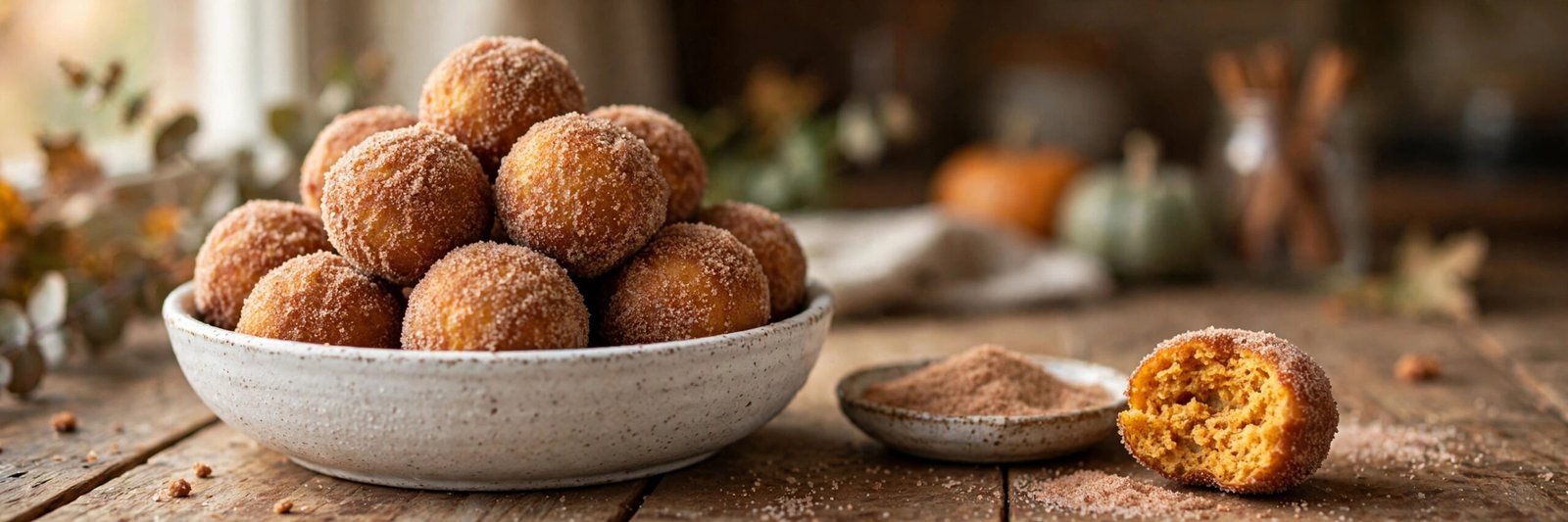
Yes, and they’re wonderful. Divide the batter into a lined muffin tin, bake at 350°F for 18–22 minutes, and while the muffins are still warm, brush the tops with melted butter and roll them in cinnamon sugar. They taste like oversized cider donut muffins, and they’re the easiest version to pack for lunch or a bake sale. Our air fryer pumpkin donut holes are another good bite-sized fall treat if you like this kind of thing.
Conclusion
An Apple Cider Donut Cake is the closest thing to a shortcut I’ve found for the flavor of an orchard cider donut — the same cinnamon sugar on your fingers, the same warm spiced crumb, the same smell filling the house — without a pot of hot oil and without spending the afternoon frying in batches. The whole recipe hangs on one step, reducing the cider, and that step takes ten minutes. Everything else is a normal cake: butter, sugar, eggs, flour, apples, spices, a bundt pan.
Make it on a weekend in October, when the cider is fresh and the apples are good. Make it for Thanksgiving, when you need a dessert that looks like you tried hard and actually took twenty minutes of work. Make it on a random Tuesday, because the house smells like fall and that’s reason enough. And if you have a half-gallon of cider sitting in the fridge door, pushed to the back, going flat — now you know what to do with it.
The cake will be gone by tomorrow. That’s not a warning. That’s the point.